
Whitin Men’s Canvas Barefoot Shoes vs High Top: Which Wins for Your Feet?
When you’re narrowing down a canvas barefoot shoes comparison, the choice between a low-cut and a high-top silhouette matters more than most shoppers realize. Both share our signature wide toe box and zero-drop sole, yet they deliver entirely different ankle freedom, ventilation, and all-day comfort profiles.
We built both styles to honor natural foot mechanics, but the high-top wraps the ankle in canvas while the low-cut leaves it open to airflow and unrestricted flexion. In this guide we walk you through the real trade-offs—sole feel, breathability, lacing depth, and the scenarios where each style pulls ahead—so you leave with the pair that fits your gait, not just your aesthetic.
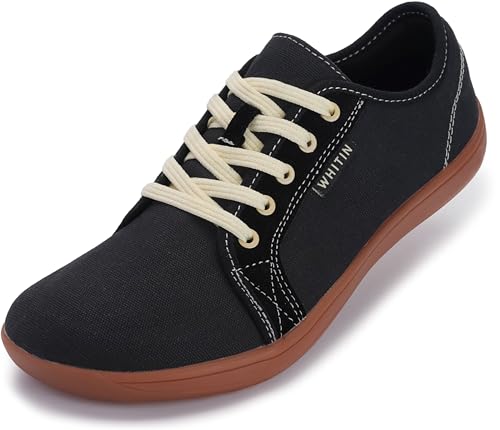
Ankle Range of Motion: Where the Silhouettes Diverge
Low-cut canvas barefoot shoes stop below the ankle bone, giving your Achilles tendon and tibialis anterior full freedom through every phase of your stride. You feel the difference immediately when you walk up an incline or squat—nothing binds.
High-tops wrap the ankle in a soft canvas collar that rides just above the malleoli. That extra inch of fabric doesn’t restrict dorsiflexion the way a stiff leather boot would, but it does add gentle circumferential contact that some wearers interpret as support and others read as constriction. If you’ve spent years in traditional running shoes, the high-top’s snug wrap can feel reassuring during the minimalist transition. If you already favor sandals or low trainers, the collar may feel like an unnecessary layer between your joint and the ground feedback you’re chasing.
Breathability and Temperature Regulation Across Seasons
Canvas breathes better than synthetic mesh in dry heat, but the low-cut silhouette takes that advantage further by leaving the entire ankle and lower shin exposed to airflow. On a ninety-degree August afternoon, the open collar sheds heat faster than any high-top ever will.
High-tops excel in the transitional months—mid-spring and early fall—when morning temperatures dip into the fifties but afternoon sun pushes past seventy. The collar keeps your Achilles tendon warm during the cold start without causing swamp-foot by midday, especially if you wear a thin merino ankle sock. In winter, neither style replaces an insulated boot, though the high-top does buy you a few extra degrees of warmth if you pair it with a thick wool sock and keep your walk under thirty minutes.
One detail worth noting: the sole durability differences between trail and road use remain identical across both silhouettes, since we use the same rubber compound and tread pattern in every canvas model.
Lacing Depth and Midfoot Lockdown Differences
Low-cut models carry four or five eyelet pairs, stopping at the base of the ankle. That shorter lacing run means you achieve midfoot lockdown faster with fewer crisscross passes, and the lower terminal eyelet leaves the ankle free to articulate without pulling against a lace.
High-tops add two or three additional eyelet pairs that climb the ankle, giving you the option to cinch the collar snug or leave the top eyelets loose for a relaxed fit. Tightening every eyelet creates a glove-like wrap from heel to lower shin, which can prevent heel slip if you have narrow ankles or plan to hike on uneven ground. Leaving the top eyelets open transforms the high-top into a pseudo-low-cut with a decorative collar, though the extra canvas still adds a few grams and traps slightly more heat than a true low-cut.
Whichever lacing strategy you choose, both silhouettes share our minimalist barefoot construction—wide toe splay, zero heel-to-toe drop, and a flexible sole that moves with your arch instead of fighting it.

Weight, Pack Size, and Travel Considerations
A men’s size ten low-cut canvas barefoot shoe weighs roughly six ounces per shoe; the high-top equivalent adds another ounce to ounce-and-a-half from the taller upper and extra eyelets. That two- to three-ounce delta feels negligible during a ten-minute neighborhood walk but becomes noticeable on a daylong urban hike or when you pack both pairs in a carry-on.
Low-cuts also compress flatter when stuffed into a duffel or backpack side pocket, since the shorter upper folds without fighting a tall ankle collar. High-tops hold their shape better, which protects the canvas from creasing but consumes more cubic inches in your luggage.
If you rotate between office days and weekend trail outings, keeping a low-cut at your desk and a high-top in your car trunk covers both scenarios without doubling your footwear weight budget. Both styles dry overnight when hung by the laces, and neither holds odor the way closed-cell foam liners do.

Style Flexibility: Pairing with Shorts, Jeans, and Athletic Wear
Low-cut canvas barefoot shoes read as clean minimalist sneakers—they pair seamlessly with chino shorts, raw denim, and cropped joggers without drawing attention to your footwear choice. The silhouette stays neutral enough that most observers never register you’re wearing a zero-drop sole.
High-tops carry more visual weight and signal a deliberate style choice, landing somewhere between a classic Converse Chuck Taylor and a modern minimalist trainer. They work well with slim or tapered jeans that stack slightly over the collar, and they add a retro-athletic edge to neutral-toned chinos. With shorts, the high-top collar becomes the focal point of your lower half, so the look skews more streetwear than invisible-runner.
Neither silhouette fits formal or business-casual dress codes, but the low-cut slides under the radar in creative-office environments where the high-top might read as too fashion-forward. Our full canvas barefoot lineup includes both cuts in multiple neutral and seasonal colorways, so you can match your preferred collar height to your existing wardrobe without compromise.
Choosing Between Low-Cut Freedom and High-Top Warmth
The canvas barefoot shoes comparison ultimately hinges on how much ankle exposure you want and which seasons dominate your wearing calendar. Low-cuts deliver maximum breathability, faster drying, and the lightest pack weight, making them the default choice for warm-weather minimalists and travelers who count ounces.
High-tops trade a small ventilation penalty for extra warmth in transitional weather, a more pronounced silhouette, and the option to cinch your ankle when trail conditions demand it. Both honor the same barefoot principles—wide toe splay, zero drop, flexible ground contact—so your foot mechanics remain natural regardless of collar height. Pick the silhouette that matches your climate and wardrobe, confident that our canvas construction keeps both styles breathable, durable, and true to minimalist movement.
Common Questions: Canvas Low-Cut vs High-Top Barefoot Shoes
The high-top collar offers gentle compression and warmth around the ankle joint, but it does not stabilize lateral motion the way a stiff hiking boot shank would. If you need rigid ankle support for heavy pack loads or unstable scree, neither canvas silhouette replaces a true backpacking boot.
For day hikes on maintained trails with a light pack, the high-top’s snug fit can remind your proprioceptors to engage stabilizer muscles, which some hikers interpret as support. That feedback loop strengthens over time as your ankles adapt to minimalist footwear.
Canvas sheds light mist for the first five to ten minutes, then begins to wick moisture through the weave. A brief dash through drizzle won’t soak your socks, but sustained rain will saturate the upper within fifteen minutes.
Both the low-cut and high-top use the same canvas weight, so neither offers a waterproof advantage. The high-top’s taller collar does keep road spray off your ankle bones when you walk through shallow puddles, which can extend dry-sock time by a few extra minutes in urban environments.
Both silhouettes share the same last and toe-box width, so your true size remains consistent across the low-cut and high-top. If you wear a men’s ten in our low-cut canvas shoe, order a ten in the high-top.
The only fit variable is lacing tension: because the high-top has more eyelets, you can cinch the midfoot tighter or looser depending on your instep height. If you have a high arch, leaving the top two eyelets loose prevents pressure on the anterior ankle without changing your base size.
Low-cut canvas barefoot shoes feel closer to sandals because your ankle remains visible and unencumbered, making the psychological shift to enclosed footwear less abrupt. Your proprioceptive feedback remains nearly identical to open footwear, just with a thin sole underfoot.
High-tops introduce a new sensory input—the collar wrapping your ankle—which can feel restrictive if you’ve spent months in sandals. That said, the high-top’s snug fit also prevents the heel-lift some sandal-wearers experience when they first try low-cut shoes, so the trade-off depends on whether you prioritize freedom or stability during your transition.
Yes, both the low-cut and high-top share our zero-drop sole and flat, non-compressible footbed, making them equally effective for barbell lifts. The wide toe box lets your toes splay for balance during squats and deadlifts, and the thin sole keeps you stable without the wobble of a cushioned running shoe.
The low-cut offers slightly more ankle mobility for deep squats and Olympic lifts, while the high-top’s lacing depth can provide a more locked-in feel if you prefer a snug midfoot during heavy pulls. Most lifters choose based on personal preference rather than performance difference, since both deliver the ground contact and proprioception that barefoot lifting demands.
Both silhouettes accommodate aftermarket insoles up to four millimeters thick without compromising toe-box height. If you’re transitioning from traditional footwear and need temporary arch support, a thin orthotic fits identically in the low-cut and high-top.
Keep in mind that adding a raised-arch insole partially negates the barefoot sole’s ground-feedback benefit. Most wearers find they can reduce insole thickness over six to twelve weeks as their intrinsic foot muscles strengthen, eventually removing the insert altogether for full minimalist function.