
How Whitin’s Zero Drop Platform Actually Supports Natural Gait
Every step you take in conventional running shoes places your heel 10-12mm higher than your forefoot, shifting your center of gravity forward and altering the natural mechanics your foot evolved to perform. Zero drop shoes eliminate that artificial elevation, positioning your heel and forefoot on the same plane.
Whitin’s zero drop platform achieves this through a uniform sole thickness from heel to toe, allowing your foot to land, load, and push off in the alignment your skeletal structure was built for. The result is a gait pattern closer to barefoot walking, with load distributed across the entire foot rather than concentrated at the heel strike.

Why Heel Elevation Disrupts Natural Movement Patterns
When your heel sits higher than your toes, your body compensates by shifting weight forward to maintain balance. This forward lean increases stress on the anterior chain — quads, hip flexors, lower back — while reducing engagement of the posterior muscles that stabilize your stride.
The elevated heel also encourages a longer stride with heel-first impact, generating a braking force with each step. Your knee absorbs this impact as a jarring deceleration rather than the smooth rolling motion a midfoot or forefoot strike provides. Over thousands of steps, this repetitive shock contributes to the wear patterns many distance runners experience in their joints.
A zero drop sole removes the structural cause of that forward shift. Your center of mass stays over your hips, your stride shortens naturally, and your foot lands closer to directly beneath your body rather than out in front of it.
How Flat Soles Preserve Ankle and Achilles Function
Conventional raised heels keep your Achilles tendon in a shortened position throughout your stride. When you transition to flat footwear, that tendon must stretch and contract through a fuller range — which is precisely the stimulus it needs to maintain elasticity and strength.
Whitin’s platform places no restriction on ankle dorsiflexion, the upward bending motion that occurs as your shin moves forward over your planted foot. This full range of motion allows your calf muscles and Achilles to work as the spring system they’re designed to be, storing and releasing energy with each step.
The adaptation period is real. If you’ve worn elevated heels for years, your Achilles has shortened to that resting length. Transitioning to zero drop requires gradual exposure — starting with short walks and building duration as your tissues adapt to the new demands.
The Role of Proprioception in Gait Correction
Thick cushioned midsoles dampen the sensory feedback your foot receives from the ground. Every surface irregularity, texture change, and angle shift sends nerve signals from mechanoreceptors in your sole to your brain, informing the split-second adjustments that keep you stable.
Whitin’s minimal stack height preserves much of that ground feel while still providing protection from sharp objects and temperature extremes. Your foot’s intrinsic muscles — the small stabilizers that control toe spread, arch tension, and side-to-side balance — engage more actively when they can sense what’s beneath them.
This heightened proprioception doesn’t just improve balance. It allows your gait to self-correct in real time. When your brain receives clear feedback about foot placement and load distribution, it can adjust muscle firing patterns to optimize efficiency without conscious thought. The detailed guide on natural foot strike mechanics covers how this sensory loop develops with consistent exposure to minimal footwear.

Load Distribution Across the Forefoot Structure
A zero drop platform doesn’t force a specific strike pattern, but it makes forefoot and midfoot landing mechanically easier. When your heel isn’t elevated, your forefoot naturally takes on more of the initial contact, spreading impact across the metatarsal heads and the arch’s longitudinal structure.
This distribution matters because your foot contains 26 bones, 33 joints, and over 100 muscles and ligaments — an elaborate shock absorption system that conventional shoes bypass by concentrating force at the heel pad. Whitin’s wide toe box complements the flat sole by allowing your toes to splay on landing, further widening the contact patch and stabilizing the foot laterally.
The arch doesn’t collapse under this loading; it compresses and rebounds, functioning as the elastic beam it evolved to be. Runners transitioning from traditional shoes often report calf soreness initially, a sign that muscles previously underused are now carrying their intended share of the work. Men’s zero drop running models feature reinforced forefoot zones that support this distribution without adding stiffness that would restrict natural flex.
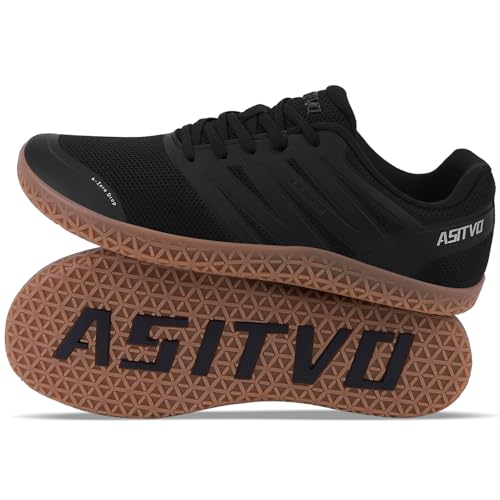
Comparing Zero Drop to Graduated Heel-Toe Offsets
Many minimalist brands offer shoes with 4mm or 6mm drops as a stepping stone between traditional footwear and true zero drop. These intermediate platforms reduce heel elevation but still preserve some forward tilt, which can ease the transition for runners accustomed to 10mm+ offsets.
Whitin’s lineup focuses on the zero drop end of the spectrum, reflecting a design philosophy that full ground contact and level positioning deliver the clearest biomechanical benefits. The absence of any ramp angle means there’s no gradient encouraging your weight forward — your body finds its natural equilibrium over the midfoot.
For those comparing options in the minimal footwear category, the detailed analysis in Whitin vs Xero barefoot shoes examines how stack height, toe box geometry, and sole flexibility interact with the zero drop foundation. The key takeaway: drop is only one variable, and the overall platform — width, flex, and ground feel — determines how your gait actually responds.
Building Gait Adaptation Into Your Routine
Transitioning to zero drop footwear is less about learning a new skill and more about unlearning compensations your body developed in response to elevated heels. The platform itself doesn’t teach you how to run — it removes the structural interference that altered your gait in the first place.
Start conservatively. Your Achilles, calves, and foot intrinsics need time to strengthen and lengthen to their new working range. Alternate between zero drop and traditional shoes during the first month, using the flat platform for short, easy efforts while your body adapts.
Pay attention to feedback. Mild muscle soreness in your calves and arches is normal; sharp pain in your Achilles or plantar fascia is a signal to slow down. Most runners who give their tissues adequate time to adapt find that zero drop platforms feel more natural and less fatiguing than the elevated shoes they replaced.
Common Questions About Zero Drop Gait Mechanics
No. Zero drop shoes simply place your heel and forefoot at the same height, removing the structural bias toward heel striking that elevated shoes create. Your strike pattern may shift toward midfoot or forefoot naturally, but the shoe itself doesn’t mandate it.
Many zero drop wearers land heel-first initially and gradually transition to a more forward strike as their mechanics adapt. The shoe allows your body to find its most efficient pattern rather than forcing one.
Most runners need 4-8 weeks of gradual exposure to adapt to zero drop platforms fully. Start with 10-15 minute walks every other day, then progress to short runs once you can walk comfortably for 30 minutes without calf or Achilles soreness.
Your Achilles tendon and calf muscles are lengthening to a range they may not have used in years. Rushing this process increases injury risk. Some athletes alternate between zero drop and traditional shoes during the transition, using the zero drop pair for short recovery runs while keeping their regular trainers for longer efforts.
Many wearers report reduced lower back discomfort after transitioning to zero drop footwear, likely because the level platform allows a more neutral pelvic alignment. When your heel is elevated, your pelvis tilts forward to compensate, increasing lumbar curve and tightening the hip flexors.
A zero drop sole removes that tilt, letting your spine stack more vertically. However, this is not a guaranteed fix — back pain has many causes, and footwear is only one variable. If pain persists, consider a gait analysis or consultation with a physical therapist.
Zero drop platforms place more demand on the intrinsic foot muscles that support your arch, which can lead to strengthening over time. However, the flat sole alone isn’t enough — your arch also needs the freedom to move and respond to ground feedback.
Whitin’s minimal midsole allows your arch to compress and rebound naturally with each step, engaging the stabilizing muscles more actively than a stiff, cushioned shoe would. Combine this with barefoot-style exercises — toe curls, single-leg balance, and short barefoot walks on varied terrain — to accelerate the strengthening process.
You don’t need to learn a new technique, but you should let your body’s natural feedback guide adjustments. Most runners instinctively shorten their stride and increase cadence when they first wear zero drop shoes, a response to the increased ground feel and lack of heel cushion.
Focus on landing with your foot beneath your hips rather than reaching out in front of your body. A shorter, quicker stride reduces braking forces and feels more natural on a flat platform. Your form will evolve gradually as your muscles adapt — forcing a specific strike pattern before your body is ready often causes injury.
Yes, and walking in zero drop shoes is often the best way to begin your transition. Walking places less impact on your Achilles and calf muscles than running, giving your tissues time to adapt to the new range of motion.
Many people find zero drop platforms more comfortable for all-day wear once the adaptation period is complete, reporting less foot fatigue and better posture. The key is gradual progression — start with a few hours of walking, then build to full days before introducing any running volume.